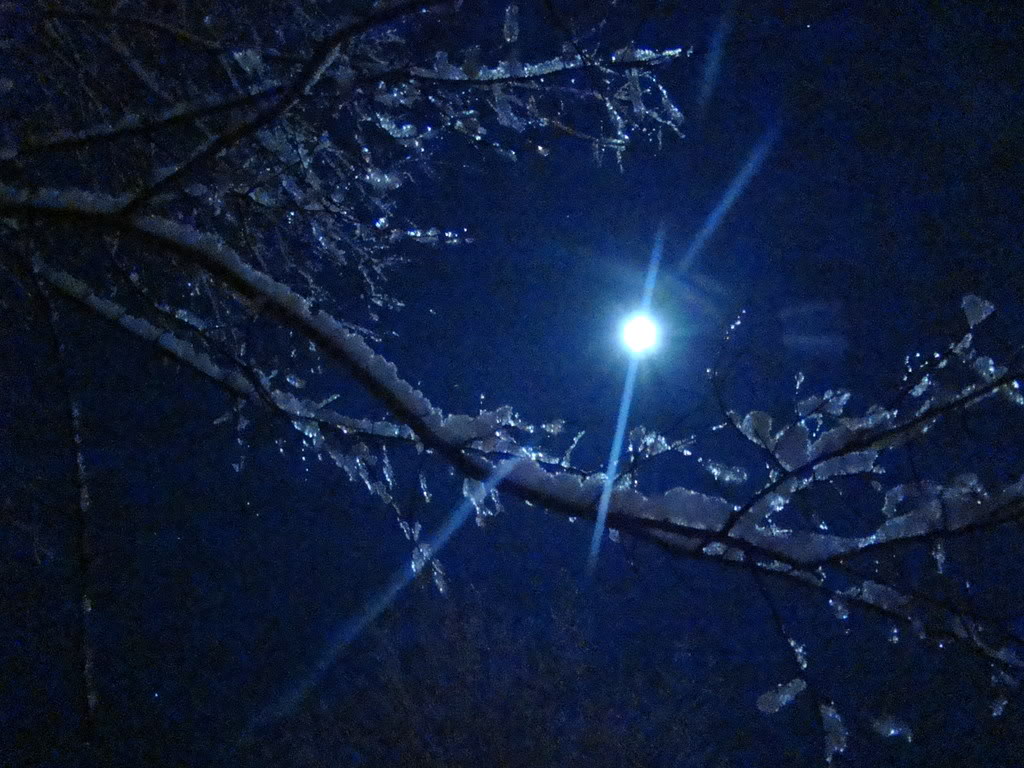
Friday, 27 November 2015

Sinning Heinously Against Purity and Decency: Coleridge's 'Christabel' (1799-1801)


We never get to the end of Christabel, Coleridge's superbly eerie and sensual Gothic verse-tale. He planned five parts; wrote one in the late 1790s, and wrote a second in 1800 hoping that the whole would be included in Wordsworth's second edition of Lyrical Ballads. When Wordsworth cut Christabel, Coleridge grew discouraged. He never finished it. That makes it more than a little tantalising. In the first part, the lovely and virtuous heroine Christabel leaves her father's castle one cold and moonlit night, to go into the nearby forest and there pray for her lover, a knight who is 'far away'. In the forest she encounters something strange.


There she sees a damsel bright,
Dressed in a silken robe of white,
That shadowy in the moonlight shone:
The neck that made that white robe wan,
Her stately neck, and arms were bare;
Her blue-veined feet unsandal'd were;
And wildly glittered here and there
The gems entangled in her hair.
I guess, 'twas frightful there to see
A lady so richly clad as she—
Beautiful exceedingly!
Mary mother, save me now!
(Said Christabel,) And who art thou? [Christabel 1:60-68]
This is the beautiful lady Geraldine, who claims to have been abducted by some rough knights, to have escaped them and now to be seeking sanctuary. Christabel leads Geraldine back inside her father's castle, tip-toes past his room so as not to wake him, and invites Geraldine to sleep in her bed.


But when Geraldine disrobes Christabel sees ... well, it's not clear what she sees:
The cincture from beneath her breast:
Her silken robe, and inner vest,
Dropt to her feet, and full in view,
Behold! her bosom, and half her side— —
A sight to dream of, not to tell!
O shield her! shield sweet Christabel!
Her bosom, and half her side what? Is withered and deformed? Is that of a beast rather than a human? Is she particoloured, or covered in scales, tattooed or diseased? We're not told. In one MS draft there is an extra line, which STC later cut: 'Behold! her bosom, and half her side/Are lean and old and foul of hue'. A later MS version of the poem changes this: 'Behold! her bosom, and half her side/Dark and rough as the sea-wolf's hide'. In the event STC preferred the poem to print without specificity. There's enough here to indicate that Geraldine is clearly something malign; and she lays an enchantment upon Christabel that prevents her from speaking.

Part 2 is set the following day: Geraldine and Christabel meet Christabel's father, Sir Leoline, in 'the Baron's presence-room'. He is impressed by Geraldine's beauty, and moved by her declaration that she is the daughter of one of Sir Leoline's childhood friends, Lord Roland de Vaux of Tryermaine. The two men had fallen out, but Sir Leoline greets this as an opportunity to make-up with him, and orders his court bard, Bracy, to ride to the castle of Lord Roland and inform the peer that his daughter is safe. Bard Bracy demurs, citing a dream he had in which the Baron's pet dove, also called Christabel, was throttled by a snake 'green as the herbs on which it couched'.


Sir Leoline insists that Bard Bracy must go, nonetheless. Meanwhile Christabel catches a glimpse of Geraldine's eyes altering in her face:
The lady's eyes they shrunk in her head,
Each shrunk up to a serpent's eye,
And with somewhat of malice, and more of dread,
At Christabel she looked askance!—
One moment—and the sight was fled!
But Christabel in dizzy trance
Stumbling on the unsteady ground
Shuddered aloud, with a hissing sound;
And Geraldine again turned round,
And like a thing, that sought relief,
Full of wonder and full of grief,
She rolled her large bright eyes divine
Wildly on Sir Leoline.
Christabel overcomes the evil enchantment placed on her just enough to be able to beg her father to send this alarming woman away; but the old man grows angry at this imputation that he would slight his duties as a host, rebukes his daughter and leaves the chamber arm in arm with Geraldine.

That's as far as the story takes us. And, actually, story is the least of this poem: it generates its effect not through events but rather via a beautifully accumulative sense of erotic dread and uncertainty, a sensual evocation of the tropes and fittings of Gothic menace and atmosphere. In Part 1, do Christabel and Geraldine go to bed in the innocent way children will sleep together? The manifest content of the poem, with its stress on Christabel's purity, suggests so; but the latent content of the poem is positively dripping with secret sexual consummation, hidden pleasures and secret shame. When old Sir Leoline leads Geraldine out at the end of part 2, is he going to marry her? Has she used her weird lamia sklls to seduce him?

One hint as to what happens next is provided by a long note Coleridge wrote, in 1819, on the fly-leaf of the first (1816) printed edition of the poem (first reproduced by John Beer in The Review of English Studies in 1986):
I still cherish the hope of finishing this poem, and if by any means I can command two months' actual leisure at the sea side, I hope to finish it in the course of the present year. Enough at present to assure you, that Geraldine is not a Witch, in any proper sense of that word—That she is a man in disguise, is a wicked rumour sent abroad with malice prepense, and against his own belief and knowledge, by poor Hazlitt. Unhappy man! I understand that when one of his Faction had declared in a pamphlet ("Hypocrisy unveiled") the Christabel "the most obscene poem in the English Language" he shrugged himself up with a sort of sensual orgasm of enjoyment, and exclaimed—How he'll stare! (i.e. meaning me) Curse him! I hate him.—

When I reflect on such things, and know that to be real which otherwise I could not have believed possible, it is an unspeakable Comfort to me that I can with my whole heart obey the divine precept, Matth: V. 43, 44, 45, 46.—

S. T. Coleridge

Feb.y 3. 1819.

Highgate.
Beer's article goes into detail as to how former close friends Coleridge and Hazlitt had, by 1819, fallen out to the extent indicated here. The pamphlet does indeed disparage Coleridge's poem. You can read it for yourself here: Hypocrisy unveiled, and Calumny detected: in a review of Blackwood's Magazine (1818): :
If after all this, the sapient editors of Blackwood’s Magazine can hope to impose upon, gull, and deceive the public any longer, they are certainly deceived in the highest degree themselves ... to make this farfamed representation of virgin purity, of matronly and religious feeling, the more striking, they have taken care to inform us, in language too licentious to be repeated here, and fit only for some “ melodious advocate of lust,” that Raphael was enabled to pourtray this object of worship to catholic Europe, by studying the figures of his mistresses ... We may also add, as a summing up of their wretched inconsistencies, that the same writer, or at least his sworn brother, the LEOPARD, has praised Byron’s Parisina, and Coleridge's Christabel, poems which sin as heinously against Purity and decency as it is well possible to imagine. [Hypocrisy Unveiled, 50]
The 'Leopard' is one of the two pseudonymous Blackwood's contributors on which the pamphlet focusses its ire; the other being 'the Scorpion'. John Beer notes that this pamphlet provoked Coleridge to several reactions:
On 31 January Coleridge had written to Southey, 'Some Genius in a pamphlet entitled Hypocrisy unveiled written against Mr Wilson has pronounced poor Christabel "the most obscene Poem in the English Lang[uage]". It seems that Hazlitt from pure malignity had spread about the Report that Geraldine was a man in disguise.' ... Coleridge returned to the question of Hazlitt's 'frantic hatred' in a letter of 9 February to William Mudford: 'It was, as I am given to understand, this same Gentleman who against his own knowledge set about the report, that the GERALDINE in my Christabel was a man in disguise, and that the whole Poem had an obscene purpose, referring to me at the same time with a shrug of malicious anticipation—Curse him! how he'll stare!—And one of his clan has had the effrontery in a published Pamphlet to declare the Christabel "the most obscene Poem in the English Language". [Beer, 41]
So Coleridge, smiling as far as he can, though clearly with his teeth gritted, wants to imply that Christabel is not the most obscene poem in English. He is at least clear that Geraldine is not a man in drag. This assertion, though, casts doubt over one of the often-reprinted versions of the way the rest of the story was going to develop, recorded by James Gillman:
The following relation was to have occupied a third and fourth canto, and to have closed the tale. Over the mountains, the Bard, as directed by Sir Leoline, 'hastes' with his disciple; but in consequence of one of those inundations supposed to be common to this country, the spot only where the castle once stood is discovered, —the edifice itself being washed away. He determines to return. Geraldine being acquainted with all that is passing, like the Weird Sisters in Macbeth, vanishes. Re-appearing, however, she waits the return of the Bard, exciting in the mean time, by her wily arts, all the anger she could rouse in the Baron's breast, as well as that jealousy of which he is described to have been susceptible. The old Bard and the youth at length arrive, and therefore she can no longer personate the character of Geraldine, the daughter of Lord Roland de Vaux, but changes her appearance to that of the accepted though absent lover of Christabel. Next ensues a courtship most distressing to Christabel, who feels—she knows not why—great disgust for her once favoured knight. This coldness is very painful to the Baron, who has no more conception than herself of the supernatural transformation. She at last yields to her father's entreaties, and consents to approach the altar with this hated suitor. The real lover returning, enters at this moment, and produces the ring which she had once given him in sign of her betrothment. Thus defeated, the supernatural being Geraldine disappears. As predicted, the castle bell tolls, the mother's voice is heard, and to the exceeding great joy of the parties, the rightful marriage takes place, after which follows a reconciliation and explanation between the father and daughter. [Gilmann, Life of Samuel Taylor Coleridge (1838) 1:304]
If not a man, or at any rate transgender woman-man, aiming sexually to possess Christabel, then what?

I have a suggestion, although it may smack rather of anticlimax. But then again, could it be that Coleridge was thinking in terms of studied anti-climax from the beginning? There are aspects of this poem that point not towards the expert creation of an eerie mood so much as the deliberate clumsiness of comedy. Anya Taylor calls it 'a poem that can drive readers "mad" or make them feel "stupid."' From its opening-"Tu-whit!-tu-whoo!"— its lulling, almost lobotomized repetitions—"Is the night chilly and dark?/The night is chilly but not dark"—its shifting narrative voices, and its metrical hesitations and forward rushes, it lures listeners into its twilight' [Taylor, 'Coleridge's "Christabel" and the Phantom Soul' SEL 42:4 (2002), 707]. Perhaps this awkwardness of tone is gesturing less at the mystic-transcendental and more at the Northanger-Abbey-style deflation of Gothic pomposity?

Here is where I bring in Cervantes, an author we know Coleridge read and admired. Let's imagine him reading Don Quixote in the 1790s, something he would almost certainly have done in Smollett's celebrated translation (1755). It is well within the bounds of possibility that he also read the spurious sequel, Second Volume of the Ingenious Gentleman Don Quixote of La Mancha: by the Licenciado (doctorate) Alonso Fernández de Avellaneda, of Tordesillas, which was translated into English by William Augustus Yardley in 1784. Let's imagine he did, at any rate. So: we bear in mind the salients of Christabel Part 1: the protagonist ventures into a dark wood, hears a beautiful maiden in distress, believes her to have been abducted by knights and marked in some supernatural way by demonic or magical powers; bear in mind also that this demonic mark involves, in some way, physical deformity. Then read Chapter 5 ‘Of the Strange and Dangerous Adventure Don Quixote’s Valiant Squire Had the Hardiness to Undertake’:
Don Quixote and his companions were now about half way on their journey to the inn where they were to lie that night; when, palling by the side of a little wood of fir-trees, they observed a doleful voice issue from among them, as it were of a woman in distress. They halted, the better to listen to it; and, being near enough, heard these words distinctly—'Alas! unhappy woman that I am! shall I find nobody to relieve me in this extremity? ...' As soon as the knight heard these words, he said to his companions—'Behold here, gentlemen, the most glorious and most dangerous adventure I ever met with since I received the order of knighthood! The wood which we now see is enchanted, and very difficult to be penetrated; the wise Friston, my ancient enemy, has in it a spacious cavern, wherein he holds a great number of knights and princesses enchanted. To theft he has lately added the sage Urganda the Unknown; she is cruelly bound with mighty iron-chains to a vast mill'stone, which two deformed demons continually whirl about; and every time her body violently strikes the rock on which the mill-stone stands, the terrible pain she endures makes her cry out in the manner we have heard.' Information like the foregoing was perfectly new and strange to the alderman; who, being by nature not over wise, answered with the utmost simplicity—'Sir Knight, enchanters are not at all used in this country; and I do not believe there is any thing of what you say in this wood; all we can judge of it is, that some highwaymen have dragged some woman into the wood, where they have robbed and abused her. It behoves us to go in and see whether she is still in a condition to be helped.'—'Mr. Alderman,'answered Don Quixote very sternly, 'do not you know I do not love to contend, and especially with little aldermen, who ought to hold their peace before knights-errant!' Bracamonte, to prevent any contest, drew near the alderman, and in few words let him into Don Quixote's character; who, as one deeply concerned in Urganda's deliverance, had already drawn his sword, and was entering the wood; affirming, that to him alone it belonged to finish that adventure. [The History And Adventures Of The Renowned Don Quixote (1784) 3:85]
In the event Sancho Panza begs the honour of the adventure, and with much comic tremulousness he goes into the woods, whilst the maiden continues calling aloud for help: 'Holy Mother of God!' (compare Christabel's 'Jesu, Maria, shield her well!') Sancho eventually 'espied a woman naked to her shift.' However, 'this sight threw him into such a consternation, that, dropping down plumb from his ass, he took to his heels, without minding which way he went, yelling with horrible vociferation—' Help! 'Murder!—Now, master Don Quixote, your trusty squire is slain!' Though she is but a woman, Sancho sees her as a damned soul liable to have 'swallowed me down like a stewed prune; for she has not eaten any thing else these six thousand years'. Don Q, on the contrary, declares the woman to be 'Zenoba, that great Queen of the Amazon', frees her and takes her to the inn. Actuality is less exotic: her real name is 'Barbara Hacked-Face': some 'fifty years of age', disfigured on one half of her body: 'her right cheek adorned with the seam of a long wound, which extended even to her ear, and which had probably been inflicted in her younger days, for her holy life and modest conversation!'

Christabel takes Geraldine's scarred or deformed half-side to be a diabolic mark, and all readers, as far as I can see, have followed her in that. Conceivably, though, the whole poem is instead a riff upon this Quixotic episode; that when STC wrote 'that Geraldine is not a Witch, in any proper sense of that word' he might have been gesturing to such a revelation. We could take him at his word. We don't want to, though, because we are as invested in the fantasy version of this unfinished poem as any Quixote.

This would explain Coleridge's cagey responses to queries about how the poem was to develop, and explain why he didn't rebut Hazlitt et all simply by spelling out his plans for the poem. He wanted to keep his Scooby-Doo twist ending in reserve. But it might also explain why he never finished it: he had done such a good job of evoking Gothic mystery and supernatural erotic frisson, he couldn't quite bring himself to puncture the bubble he had himself blown. For readers now, the truly heinous sin would be the reading of the poem that denies its impurity and indecency.

Monday, 23 November 2015

'When Absent Soon To Meet Again' (1810)


This may be stating the obvious, but the opening prose section of this Coleridge March 1810 Notebook entry (much scribbled over and crossed out in the original) is actually a run-on draft of a poem. Now, lines 5-20 of the set-as-verse section of this, the passage beginning 'I have experienc'd/The worst, the World can wreak on me', was published after Coleridge's death, in Ernest Hartley Coleridge's Poetical Works (1912), as 'Fragment 35'. But what of the earlier lines?

A little judicious reconstruction gives us:
When absent soon to meet again
That morning, and that last Employ
Had only so much certain Pain
As fears of Hope detract from Joy.
And now—O then I'm least opprest
When with the cleansing stream I mix
My tears, and oft I'd fain neglect
Myself, as anguish sinking down
Comes o'er me—yet I cannot own
The love-enchanted spirit fixed.
For not death, absence nor demerit—
Can free the love-enchanted spirit;
And I seem always in her eyen,
And she'll no more appear to mine.
The first quatrain is clear enough; the later lines are open to a variety of possible reconstructions from the muddle of STC's initial thoughts, and I'm not sure this is the best of them. You can see where his pre-revision poet's imagination shifts gear, from rhymed octosyllabic self-pity into decasyllables ('Such anguish and such sinking down of heart' and so on) that in turn shift him towards a blank verse expression of more public misery.  'Comes o'er me, yet never can I' lacks a two-syllable top-off: 'escape' maybe; and then we're into the next four lines, laid out as verse.

I think, then, that this is two poems: one an embryonic tetrameter lyric, the other (lines 5-20) a more finished blank verse meditation. Now, one argument against my 'reconstruction' of the first of these is that Coleridge was not a poet who particularly favoured half-rhymes like 'opprest/neglect' and 'mix/fixed' (plus I freely concede that 'eyen'/'mine' is a stretch on my part). Me, I like half-rhymes. But let's say we give ourselves even more latitude and try to second-guess how STC might have shifted things about to preserve a fuller rhyme-scheme:
When absent soon to meet again
That morning, and that last Employ
Had only so much certain Pain
As fears of Hope detract from Joy.
But now—O then I'm least opprest
When with the cleansing stream I mix
My tears, and oft I'd fain transfix
Myself, as anguish sinking down
Comes o'er me—yet I cannot drown
My grief or ever bring it rest.
For not death, absence nor demerit—
Can free the love-enchanted spirit;
And I seem always in her eye,
And she'll ne'er more appear to mine.
Not sure if the first 'love-enchanted spirit' line needs altering to avoid its repetition (as I have done in this more speculative second version), or whether the repetition is itself a good poetic effect.

Kathleen Coburn, in her edition of the Notebooks, suggests that this self-pitying piece of writing was provoked by Sara Hutchinson's decision (in March 1810) to leave the Wordsworths' house and go live with her brother Tom and cousin John Monkhouse in Wales: keeping house for the two men whilst they farmed. This she did, and seems to have enjoyed it, although it took her out of the ambit where Coleridge was likely to meet her (and indeed, he never visited her in Wales). Hence: anguish. Hence, also perhaps, a bitter recall, here, of 'the EPOCH', from three-and-a-bit years previously. It's tempting to read the 'that morning' of line 2 as a reference to the morning of Saturday 27th December 1806. The first four lines are 'then'; the latter ten 'now', and the difference between the two sections is that Coleridge believes he's never going to see the woman he loves again.

There's a degree of artificiality (a less sympathetic reader might say: of bodge-job) about this reconstructed poem, of course; but I quite like it nonetheless. It's like a sort of anti-sonnet. Not entirely un-maudlin, it's true; but it holds its 'I'll never see her again, so I shall go drown myself in the river' psychological melodrama at enough of an arm's-length to squeeze real pathos out of its sorrow.

Saturday, 21 November 2015

Whoo!


There are gems in even the most abstruse and theological of Coleridge's marginalia. Take the above, an annotation to James Relly's The Believer's Treasury, or the Union, Consanguinity and Affinity of Christ and His Church (1824). Sometimes speculation about the guilt-by-association of an incarnation of guiltlessness provokes the Keanu in us all.


Friday, 20 November 2015

'When Hope But Made Tranquillity Be Felt' (1810)


This is one of Coleridge's many fragmentary pieces of poetry, originally written in his notebook in March 1810 [it's Notebooks 3:1 3732, in case you want to track it down], only posthumously included in collections of his complete verse:
When Hope but made Tranquillity be felt—
A Flight of Hopes for ever on the wing
But made Tranquillity a conscious Thing—
And wheeling round and round in sportive coil
Fann'd the calm air upon the brow of Toil—
That's the whole poem. The sentiment here rather looks like an earlier version of Dickinson's more famous 'hope is the thing with feathers'. Birdlike hopes flock and flutter around hot, fretful STC, fanning his brow and bringing him tranquility.

The 'but' is a slightly wrongfooting connective, though. Isn't it? It tugs the meaning in two quite different directions: between 'When Hope simply allowed Tranquillity to be felt' on the one hand, and 'When Hope,—though it made Tranquillity be felt ...' on the other. The latter case foregrounds the fragmentariness of the fragment, and would invite us to take the whole text from 'but made...' through to '...of Toil' as a subordinate clause, to be followed by some kind of negating main verb. For example: 'When hope—though it made tranquillity be felt—failed ...' and so on.  The first reading is the one most people would gravitate towards, I suppose; although even if we take this short piece as a little moment of optimism the repetition, 'but ... but ...' nags, rather, at the whole.

I wonder if Coleridge's prompt for this fragment was Francis Bacon's essay 'Of Hope' (it was number 13 in the second section of the final collected essays, ‘Essays on Oeconomical Subjects’). Perhaps counter-intuitively, Bacon counsels against hope. 'Hope and Fear are two bad Presagers, and not to be trusted,' he says, adding:
If the Success prove less than was hoped, it seems to be rather a Loss than a Gain; as falling short of the thing expected. If the Success be adequate to the Hope; yet even thus the Flower of the Benefit is cropped by Hope; and fades in the Enjoyment. Lastly, If the Success be greater than was hoped, there seems indeed to be some Advantage received; but were it not still better to have had the Principal without hoping at all, than the Interest, by hoping too little? And this is the Operation of Hope in Matters of Prosperity. In Matters of Adversity, Hope breaks the true Courage of the Mind, for there is not always an Occasion of hoping; and with any, even the least Desertion of Hope, almost the whole Support of the Mind is gone. It also lessens our Dignity to bear Misfortunes by a certain Alienation and Error of the Mind; and not with Firmness and Strength of Judgment. 'Twas therefore wrong in the Poets to make Hope the Antidote and Mitigator of human Calamities, when in reality it rather exasperates, multiplies, and renews them.
Bacon then considers, and dismisses, one possible counter-argument:
It may be asked, if it not better, since Things are placed in Uncertainty, to expect the best, and rather to hope than despair; because Hope procures the greater Tranquillity to the Mind? I answer, that in all Delay and Expectation, I judge a serene and steddy State of the Mind, arising from a due Regulation and Composure thereof, to be the principal Strength and Support of human Life; but reject the Tranquillity which depends upon Hope, as a weak Thing. Tho it may not be improper, from a sound and sober Conjecture, to presuppose and foresee both good and bad Fortune, that we may the better suit our Actions to the Probability of Events; provided this be made the Office of the Understanding and Judgment, and is attended with a just Sway of the Affections.
We know Coleridge read Bacon; we know that he often despaired and craved a sense of individual and spiritual tranquility that receded ever before him as he moved. Might this last quoted paragraph of Bacon's have provided the substance and meat of the latter portion of this poem, had Coleridge ever completed it? Coleridge's Baconian old-school spelling of 'tranquillity' (a word much more often spelled 'tranquility' by 1810) makes me think so.

Thursday, 19 November 2015

Not a Hitherto Undiscovered Poem By Coleridge: 'When Moses Stood With Arms Outspread'


George Whalley, in his monumental edition of Coleridge's Marginalia , records a lost copy of Brady and Tate's A New Version of the Psalms of David, Fitted to the Tunes Used in Churches (1805) that Coleridge once owned [1:475].  According to a 1903 Sotheby's sales catalogue, this edition contained '12 lines of original verse in [Coleridge's] handwriting on the flyleaf', but tantalisingly the catalogue only quotes four of them. Those four lines are recorded by Whalley, and you can see them in the image at the top of this post. And to be fair to him, Whalley is cautious about the supposed novelty of these verses.


'It is not certain that the verses are C.'s'. Indeed not, for it turns out they are by William Cowper, and not Coleridge at all. In fact they are from Cowper's poem 'Exhortation to Prayer', first published in his Olney Hymns (1783). Presumably this means Coleridge owned a copy of this book, though that fact is not otherwise recorded in the Marginalia, or elsewhere. Here's the full text of Cowper's poem, and therefore (in the last three stanzas) the twelve lines written by STC on the flyleaf of his edition of this now-lost Psalmery:
What various hindrances we meet
In coming to the Mercy-seat!
Yet who, that knows the worth of prayer,
But wishes to be often there?

Prayer makes the darkened cloud withdraw;
Prayer climbs the ladder Jacob saw;
Gives exercise to faith and love,
Brings every blessing from above.

Restraining prayer, we cease to fight,
Prayer makes the Christian’s armour bright;
And Satan trembles when he sees
The weakest saint upon his knees.

While Moses stood with arms spread wide.
Success was found on Israel's side;
But when through weariness they fail’d,
That moment Amalek prevail'd.

Have we no words? Ah, think again;
Words flow apace when you complain,
And fill your fellow-creature’s ear
With the sad tale of all your care.

Were half the breath thus vainly spent,
To heaven in supplication sent,
Your cheerful song would oftener be,
“Hear what the Lord has done for me!”
Amalek was the grandson of Esau, and the reference here is either to the individual or to the nation he founded, both enemies of Israel. Check out Exodus 17.8-14 if you're interested.

It's odd that Coleridge misremembers 'While Moses stood with arms spread wide' as 'While Moses stood with arms outspread', since it treads all over the rhyme. This, though, was presumably a Cowper poem that meant a lot to him.

Related is a margialium Coleridge added to his copy of Sermons, Or Homilies, Appointed to be Read in Churches in the Time of Queen Elizabeth, of famous memory (1815). To the following sermonic passage
Now, the great necessity of prayer being sufficiently known, that our minds and hearts may be the more provoked and stirred thereunto, let us briefly consider what wonderful strength and power it hath to bring strange and mighty things to pass. We read in the Book of Exodus, Exod. xiii. that Joshua, fighting against the Amalekites, did conquer and overcome them, not so much by virtue of his own strength, as by the earnest and continual prayer of Moses; who as long as he held up his hands to God, so long did Israel prevail; but when he fainted, and let his hands down, then did Amalek and his people prevail: insomuch that Aaron and Hur, being in the mount with him, were fain to stay up his hands until the going down of the sun; otherwise had the people of God that day been utterly discomfited, and put to flight.
Coleridge added:
I believe: Lord help my Unbelief! I pray: o enable me to pray—O Word, O Spirit of the Lord, be ye unto me, as Aaron and Hur unto Moses on the Mountain! O stay up my hands until the going down of the Sun the day-star of my mortal Life, lest Amalek and his people, even they that are within me, prevail against me—I would fain hold up my hands—I faint. I let my hands down—O stay up my hands—O gracious Word and I unbreathed Wisdom! O Light! O Life of God—O Light of Man! Ye stayed up my hands even when they were sinking, and in my utter Fainting did live in me, yea, for me and instead of me—otherwise I had been utterly discomfited!—Lo, I pray! O that I had the power of supplication! I believe: O Lord—help my Unbelief! [Marginalia, 4:683]
What's clear from this is that, for Coleridge, the 'Amaleks' are within him, and the power of prayer is to be directed against his own failings.

Wednesday, 18 November 2015

Nocte Gelu: Coleridge's 'Frost at Midnight' and Genesis 31


Coleridge's 'Frost at Midnight', written in February 1798, is one of his most celebrated poems. And rightly so, since I can't think of another poem as beautifully evocative of midnight silence: the solitude of the poet by the low-burning fire whilst all the other inhabitants of his house are asleep; his baby asleep in his cot beside him. Coleridge ponders what the future holds for his son, Hartley, and undertakes to raise him right. In the event, Hartley's upbringing wasn't something Coleridge could take a whole lot of credit for; but his heart is in the right place, here. In other words, this is a poem about fatherhood. It is also a poem in which the silence, the 'secret ministry' of the frost outside, and the film of fire over the burning coals—known colloquially as a 'stranger', since it is supposed to portend the arrival of an unexpected visitor—all send Coleridge back in reminiscence to his own childhood, and in particular to his unhappy experiences as a boarder at his London school, Christ's Hospital. That unhappiness is epitomised by the vignette of the boy-Coleridge, told what the fire-film of the 'stranger' on the school fire is supposed to mean, looking up expectantly for his visitor, hoping that it would be somebody from home to take him away. The final section of the poem performs Coleridge's promise to baby Hartley that he will be raised in the countryside, close to the spiritual and healthful influence of Nature, and not sent away to the city as Coleridge himself was. There's something so exquisite in the way the final image of the poem brings us back to the mystic-silent frost and moonlight of the opening lines that it's hard to read without shivers going up the back of the neck.
The Frost performs its secret ministry,
Unhelped by any wind. The owlet's cry
Came loud–and hark, again! loud as before.
The inmates of my cottage, all at rest,
Have left me to that solitude, which suits
Abstruser musings: save that at my side
My cradled infant slumbers peacefully.
'Tis calm indeed! so calm, that it disturbs
And vexes meditation with its strange
And extreme silentness. Sea, hill, and wood,    [10]
This populous village! Sea, and hill, and wood,
With all the numberless goings-on of life,
Inaudible as dreams! the thin blue flame
Lies on my low-burnt fire, and quivers not;
Only that film, which fluttered on the grate,
Still flutters there, the sole unquiet thing.
Methinks, its motion in this hush of nature
Gives it dim sympathies with me who live,
Making it a companionable form,
Whose puny flaps and freaks the idling Spirit     [20]
By its own moods interprets, every where
Echo or mirror seeking of itself,
And makes a toy of Thought.

     But O ! how oft,
How oft, at school, with most believing mind,
Presageful, have I gazed upon the bars,
To watch that fluttering stranger! and as oft
With unclosed lids, already had I dreamt
Of my sweet birth-place, and the old church-tower,
Whose bells, the poor man's only music, rang
From morn to evening, all the hot Fair-day,     [30]
So sweetly, that they stirred and haunted me
With a wild pleasure, falling on mine ear
Most like articulate sounds of things to come!
So gazed I, till the soothing things, I dreamt,
Lulled me to sleep, and sleep prolonged my dreams!
And so I brooded all the following morn,
Awed by the stern preceptor's face, mine eye
Fixed with mock study on my swimming book:
Save if the door half opened, and I snatched
A hasty glance, and still my heart leaped up,     [40]
For still I hoped to see the stranger's face,
Townsman, or aunt, or sister more beloved,
My play-mate when we both were clothed alike!

Dear Babe, that sleepest cradled by my side,
Whose gentle breathings, heard in this deep calm,
Fill up the intersperséd vacancies
And momentary pauses of the thought!
My babe so beautiful! it thrills my heart
With tender gladness, thus to look at thee,
And think that thou shalt learn far other lore,        [50]
And in far other scenes! For I was reared
In the great city, pent 'mid cloisters dim,
And saw nought lovely but the sky and stars.
But thou, my babe! shalt wander like a breeze
By lakes and sandy shores, beneath the crags
Of ancient mountain, and beneath the clouds,
Which image in their bulk both lakes and shores
And mountain crags: so shalt thou see and hear
The lovely shapes and sounds intelligible
Of that eternal language, which thy God     [60]
Utters, who from eternity doth teach
Himself in all, and all things in himself.
Great universal Teacher ! he shall mould
Thy spirit, and by giving make it ask.

Therefore all seasons shall be sweet to thee,
Whether the summer clothe the general earth
With greenness, or the redbreast sit and sing
Betwixt the tufts of snow on the bare branch
Of mossy apple-tree, while the nigh thatch
Smokes in the sun-thaw; whether the eave-drops fall    [70]
Heard only in the trances of the blast,
Or if the secret ministry of frost
Shall hang them up in silent icicles,
Quietly shining to the quiet Moon.
It's a poem that has been very often read and studied, usually from a position of frank admiration: it is 'one of his most delightful conversation poems' (Rosemary Ashton); 'perhaps the most beautiful of Coleridge's conversation poems' (Adam Sisman) and so on. Richard Holmes thinks the poem 'one of the most intricately structured of all the Conversation Poems, performing a characteristic 'outward and return' movement through time and space ... This curve of memory and prophesy gives the poem a rich emotional resonance – sadness, poignancy, hope, joy – held in exquisite tension'. What else is there to say? Well, Paul Magnuson notes how Coleridge uses the poem ‘to bless his son’:
Hartley will ‘see and hear’ [line 58] God’s eternal language in all seasons … There in an ambivalence in his gesture of blessing, since it is others who read nature’s language. In the final version of ‘Frost at Midnight’ Coleridge returns to the ‘deep calm’ [45] on the winter midnight, but in an earlier version he returned to the ‘dead calm’, a troubling indication that Hartley’s role is not simply that of a second self, but of someone granted a blessing that Coleridge cannot share.
It's astute of Magnuson, I think, to recognise the extent to which this poem records not harmony so much as a sort of chasm existing between Coleridge and his son. Indeed, the verse's calmness of tone is a little baffling: is it the deep peacefulness of a contented spirit, or the blankness of a despairing soul who has, even if only temporarily, accepted his hopelessness, and deferred hope onto the life of his son? We all know what hope deferred maketh of the heart.

So: a poem about fatherhood and sonhood, and it takes its starting point in religiously-inflected thoughts about a frost, at midnight. Since the poem so clearly, even ostentatiously, indicates that this is a matter of specific personal observation (Coleridge actually sitting in his cottage at midnight, actually watching the fire, actually peering through the window at the frost outside) it might look perverse to pursue a literary source. Nonetheless that's what I'm going to do.

I'm going to do so because I am surprised, even to the point of astonishment, critics have missed that the phrase 'frost at midnight' itself is a Biblical tag. Well, maybe astonishment oversells it. To register the allusion we need to turn to the Vulgate, which not everybody is in the habit of doing: nocte gelu (there is no specific Latin word for 'midnight' as opposed to 'night'; the one is folded into the other, semantically). Genesis 31:40:
Die aestu consumebar et nocte gelu, fugiebatque somnus ab oculis meis.
Here's the KJV's translation: 'Thus I was; in the day the drought consumed me, and the frost by night; and my sleep departed from mine eyes', which I'm going to tweak, without departing from the meaning of the Latin (and I daresay the original Hebrew), to emphasise my point: 'Thus I was: in the day the drought consumed me, and the frost at midnight; and my sleep departed from mine eyes'.

Chapter 31 of Genesis has to do with the relationship between Laban and Jacob. As I'm sure you know, Laban was Jacob's uncle, with whom the patriarch-to-be lived for twenty years. The deal was originally supposed to be: Jacob would serve his uncle seven years and at the end get to marry Laban's daughter Rachel as reward; but after seven years Jacob is instead tricked into marrying Leah. So Jacob agrees to work for Laban a further seven years in order to be able to marry Rachel as well. Finally, six years after his 14-year-stint was supposed to have ended, Jacob snuck away from his uncle, taking his wives and all his kine with him. Good word, kine. In Genesis 31 Laban comes after Jacob, and despite dream-warnings from God not to hassle him, catches up with him near Gilead. He rebukes Jacob: 'Wherefore didst thou flee away secretly, and steal away from me; and didst not tell me, that I might have sent thee away with mirth, and with songs, with tabret, and with harp?' [Genesis 31:27]. This makes me rethink whether the 'secret' part of Coleridge's frost secret ministry might not carry with it the sense of something stealing away, something retreating. In reply Jacob upbraids Laban:
36 And Jacob was wroth, and chode with Laban: and Jacob answered and said to Laban, What is my trespass? what is my sin, that thou hast so hotly pursued after me?

37 Whereas thou hast searched all my stuff, what hast thou found of all thy household stuff? set it here before my brethren and thy brethren, that they may judge betwixt us both.

38 This twenty years have I been with thee; thy ewes and thy she goats have not cast their young, and the rams of thy flock have I not eaten.

39 That which was torn of beasts I brought not unto thee; I bare the loss of it; of my hand didst thou require it, whether stolen by day, or stolen by night.

40 Thus I was; in the day the drought consumed me, and the frost at midnight; and my sleep departed from mine eyes.

41 Thus have I been twenty years in thy house; I served thee fourteen years for thy two daughters, and six years for thy cattle: and thou hast changed my wages ten times.

42 Except the God of my father, the God of Abraham, and the fear of Isaac, had been with me, surely thou hadst sent me away now empty. God hath seen mine affliction and the labour of my hands, and rebuked thee yesternight.
The encounter ends well: Jacob builds a pillar out of stones as a kind of altar (he says to his uncle '"Now therefore come thou, let us make a covenant, I and thou; and let it be for a witness between me and thee." And Jacob took a stone, and set it up for a pillar'). Laban goes back home and Jacob goes on to his destiny, which is to change his name to Israel and become the father of the twelve tribes.

If we situate the text in this context, or even perhaps read Coleridge's poem as an oblique gloss upon this Biblical passage, what does it tell us? Well, presumably Coleridge is the Laban-figure here and Hartley the Jacob. This might point up the ambiguity of Coleridge's feelings of paternal affection and his desire to protect. To quote Wikipedia, Laban is often taken as 'symbolizing those whose concern for the welfare of their immediate family, nominally a virtue, is taken to the point where it has lasting negative ramifications.' Even as he promises to look after his son, Coleridge is tacitly conceding the dangers of being over-protective. And the fact that Laban is an uncle, and father-figure, rather than an actual father speaks perhaps to Coleridge's buried uncertainties about his own paternal role. 'Frost at Midnight' is a poem that expects a better life for the son than the father had; and that frames its covenant—for covenant this poem assuredly is—in terms of a fort-da journey out in the direction of the son that circles round to a frosty return. 'And early in the morning,' this chapter of Genesis end, 'Laban rose up, and kissed his sons and his daughters, and blessed them: and Laban departed, and returned unto his place.'

In the Genesis passage the frost at midnight is an affliction Jacob has had to undergo, rather than an environment that prompts Laban to thought (although I suppose we might say that Jacob bringing it to Laban's attention makes him think about it). I wonder if the parching 'heat at the daytime' is in some sense behind Coleridge's first, slightly wrong-footing remembrance of his childhood 'hot Fair-day' which is almost immediately replaced by his later memory of boarding in London at Christ's Hospital? And I wonder if the heap of coals in his grate is connected in some sense with the heap of stones Jacob assembles as correlative to his covenant with Laban: 'And Jacob said unto his brethren, Gather stones; and they took stones, and made an heap ... And Laban said to Jacob, Behold this heap, and behold this pillar, which I have cast betwixt me and thee; This heap be witness, and this pillar be witness, that I will not pass over this heap to thee, and that thou shalt not pass over this heap and this pillar unto me, for harm' [Genesis 31:46-52]. It is, in other words, the heap of stones that establishes the principle of 'being strangers' as a guarantee of no harm. And when Coleridge imagines Hartley wandering 'beneath the crags/Of ancient mountain' [60-61], a rather oddly singular mountain, is he on some level thinking of Gilead, the mountain at the foot of which Laban and Jacob reconciled and made their covenant? Gilead in Hebrew means both the 'eternal joy' of God and the 'eternal stone' or 'eternal memorial'. That might be why Coleridge's otherwise unnamed mountain embodies 'the lovely shapes and sounds intelligible/Of that eternal language, which thy God/Utters, who from eternity doth teach/Himself in all, and all things in himself'.

Monday, 16 November 2015

"Prospectus of a course of lectures by S.T. Coleridge 1818"


Other duties have taken me away from STC for three weeks or so, but now I'm quit of them and the rest of the year, pretty much, will be all Coleridge all the time. Hopefully, that will entail new matter for this blog. Here, for the time being, is the syllabus of the course that has come to be known as the 'Lectures on European Literature'. I don't deal with these in my forthcoming edition, which restricts itself to the 1811-12 and 1818-19 Shakespeare lectures; but it's pretty interesting stuff.

The real question is whether my blogging in the weeks to come will attain to a manly, unaffected and Pure language, as per Lecture 14.